BRIEF HISTORY OF THE INSTITUTE
The Nigerian Navy Institute of Technology (NNIT) was established as the Nigerian Naval Technical Training Centre (NNTTC) in 1982 with the support of the International Military Services (IMS) of the United Kingdom and was then located in Port Harcourt.The Centre was originally responsible for training naval personnel on basic maintenance of ships’ systems and equipment. However, as the Nigerian Navy (NN) acquired more ships, the Centre’s roles expanded gradually to fostering specialized training and education in various technical fields for the NN’s technical personnel.
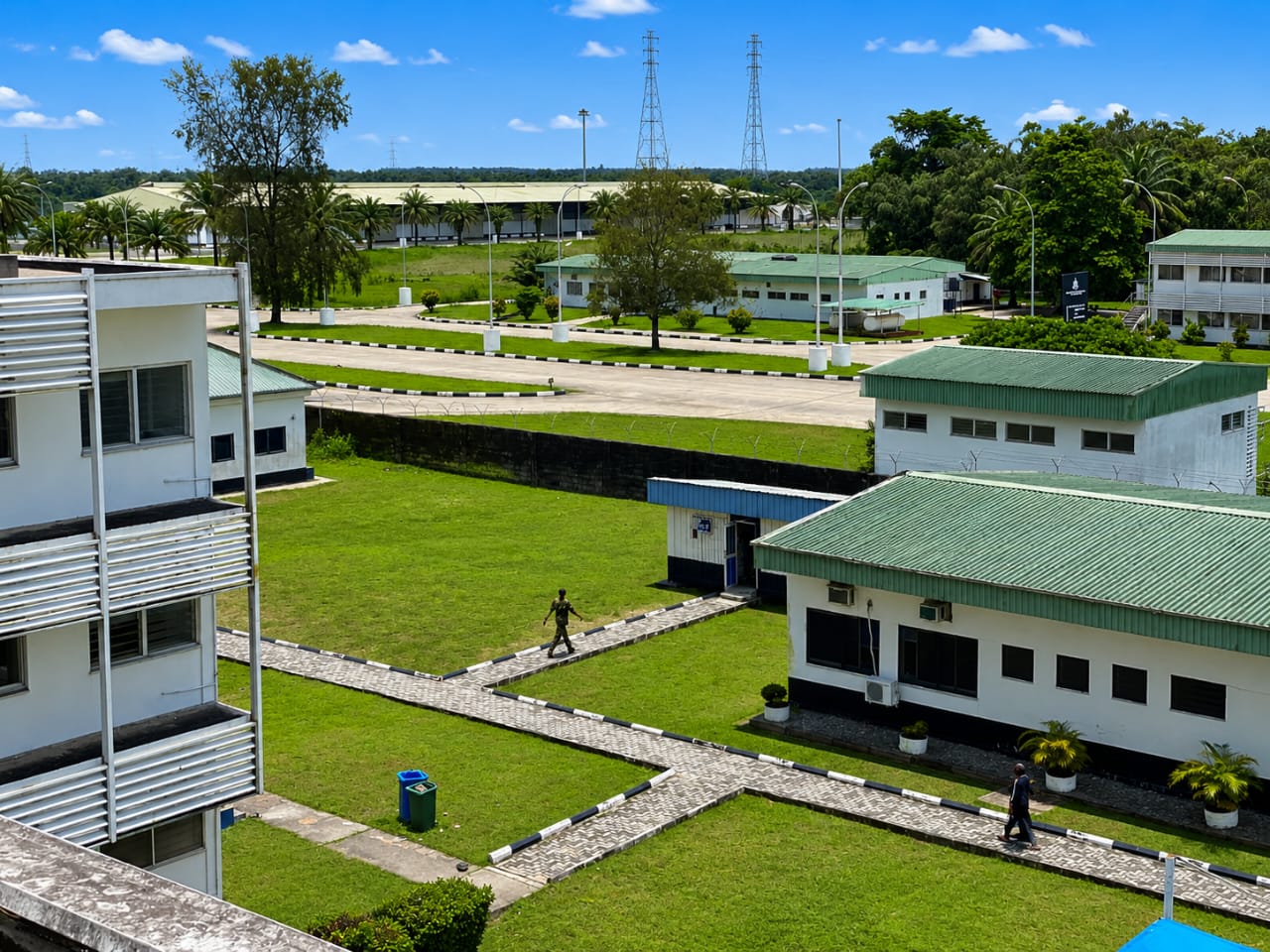
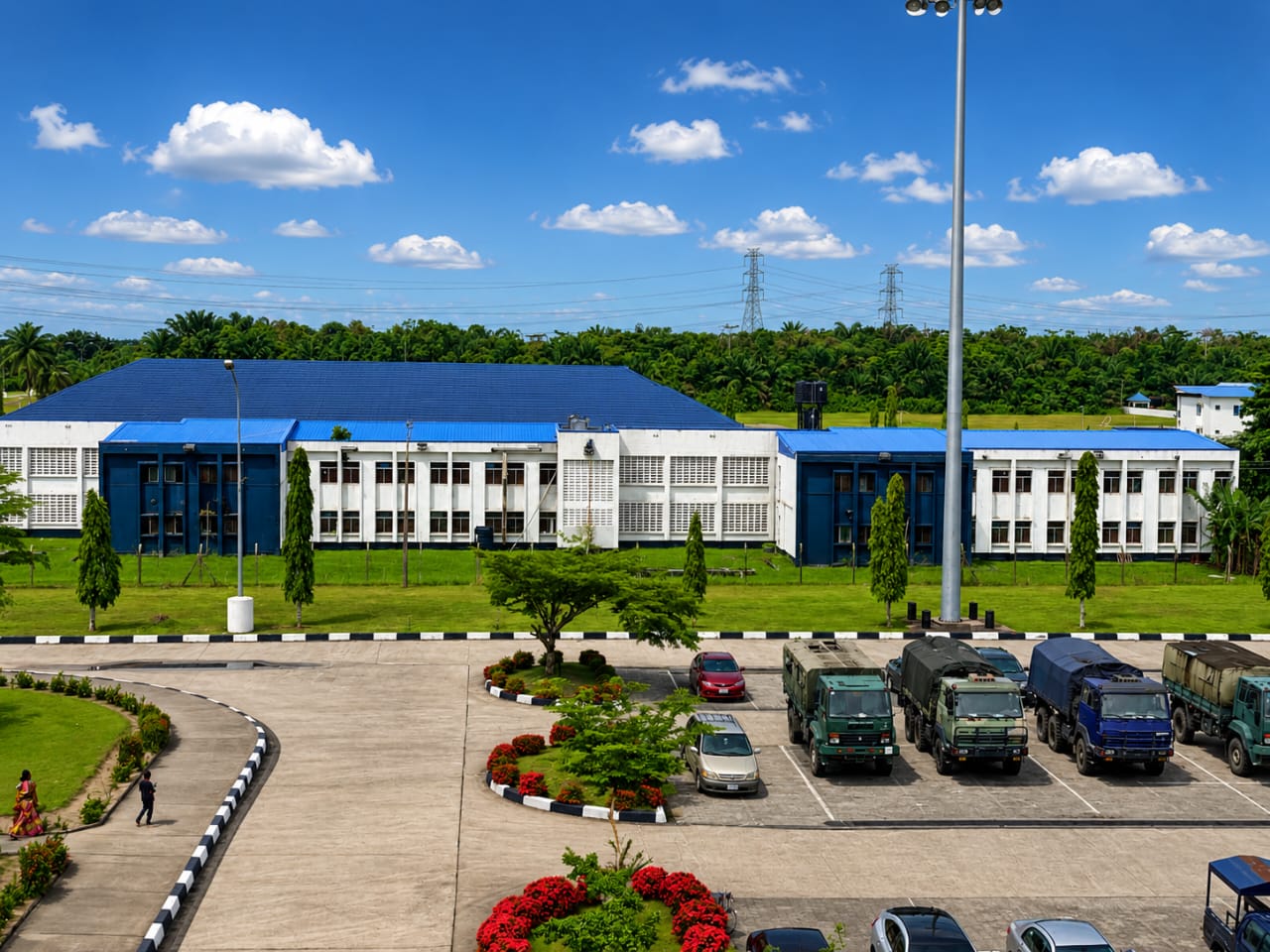
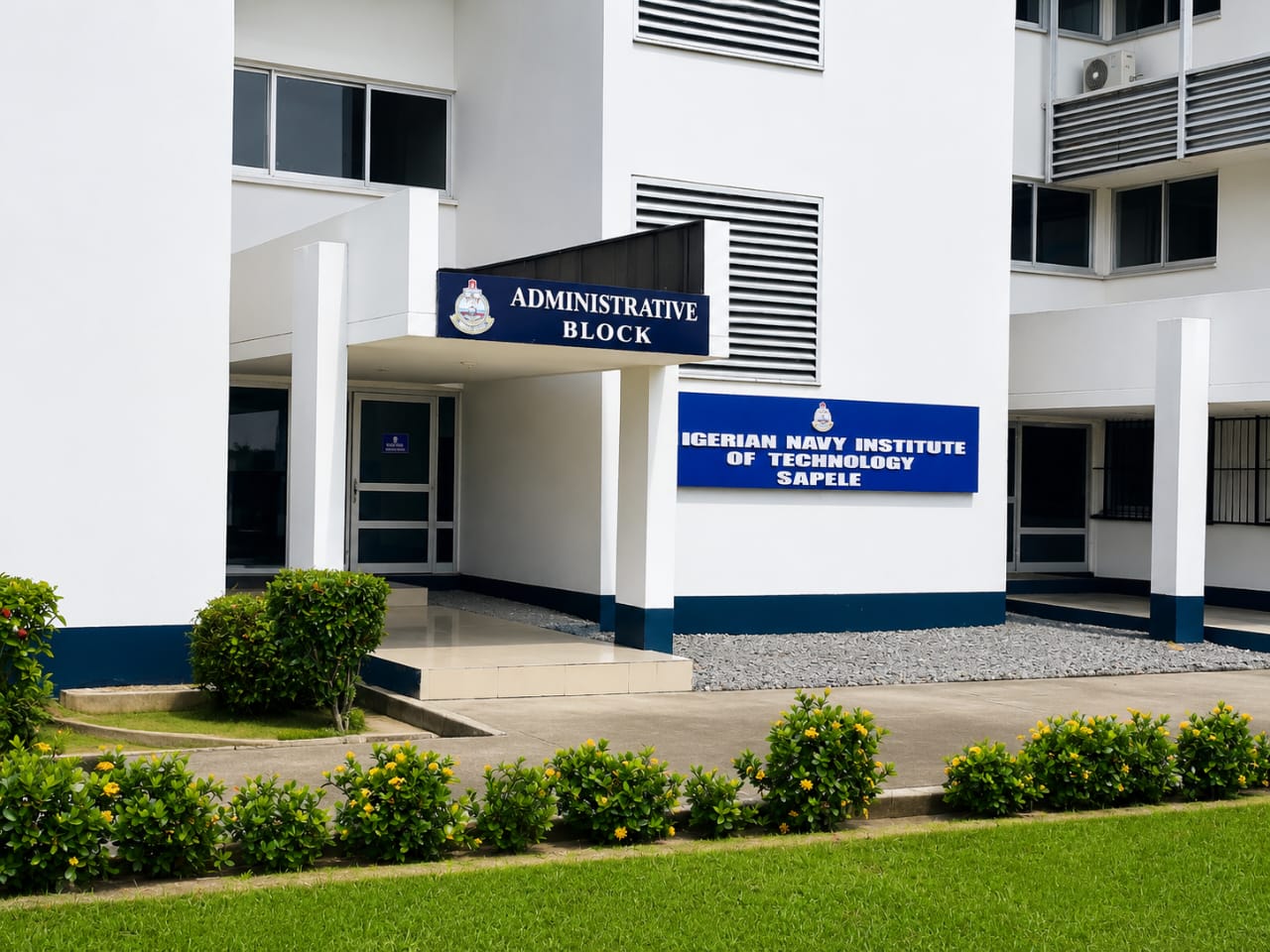
The NNTTC relocated to its present site in Sapele in 1985 and was commissioned and renamed Nigerian Navy Ship URHIAPELE (NNS URHIAPELE). That same year, Messrs Dornier of Germany replaced the IMS as the technical partner of training of naval ratings. In 1994, the Institute embarked on indigenous training of officers and ratings with the commencement of Officers’ Application Course (OAC) and the Artificer courses. Since then, various courses for naval officers and ratings have been conducted locally including the Special Duty Post Commissioning Training (SDPCT) and Intermediate Level Maintenance Course (ILMC).Messrs Dornier disengaged in the year 2000, thereby making the training of NN technical personnel wholly indigenous.
In 2003, the Institute was renamed Nigerian Navy Engineering College (NNEC) with a reviewed curriculum for more specialized training programmes. Since then, the College has consistently trained naval personnel from the NN and other allied other allied navies in West Africa. In 2020, the College commenced the processes for accrediting its 4-year Artificer courses in alignment with the provisions of the National Board for Technical Educational (NBTE) for the award of Higher National Diploma (HND) to its graduands.The efforts earned the College NBTE accreditation to run HND in Electrical and Electronic Engineering (Electronics and Telecommunication Option), ND in Marine Engineering and ND in Welding and Fabrication Technology in 2023. This necessitated the re-designation of the College as Naval Institute of Technology in February 2024.In June 2025, the Institute obtained NBTE approval and accreditation for most of the other regular courses hitherto not approved or accredited. These include approval to run HND programmes in Marine Engineering, Electrical and Electronics Engineering (Power and Machines Option) and Welding and Fabrication Technology. Others are ND in Computer Engineering, Mechanical Engineering and Computer Science. Following this development, in August 2025, the College was upgraded to a full Polytechnic status through NNO 15/25 and renamed Nigerian Navy Institute of Technology. This wasin an attempt to further reposition the College to achieve improved training outcomes and leverage diverse educational intervention programmes.
The recent and ongoing transformation of the Institute reflects a strategic shift to position her as a hub for cutting-edge technological training. This rebranding aligns with the NN’s modernization goals. It is believed that these efforts will not only enhance the Institute’s capacity to deliver world-class training but also solidify its role as a key contributor to the operational efficiency and technological advancement of the NN.
INTELLECTUAL PRODUCTS OF THE INSTITUTE
NNIT trains engineering mechanics, technicians, artificers and naval engineers to play different roles in the engineering and maintenance architecture of the NN.These intellectual products of the Institute differ in terms of skill level, responsibilities, qualifications and are described accordingly.
a. Engineering Mechanics:Engineering mechanics are primarily involved in hands-on, practical tasks related to the operation, maintenance, and repairs of machinery and equipment on a ship. They work under the supervision of more personnel. Their main responsibilities includes routine maintenance and conducting basic repairs, operation and troubleshooting on shipboard systems and machineries, such as engines, pumps, generators, radar, sonar and weapons systems. They also assist higher level technicians or artificers in more complex tasks. They are usually not specialized in any particular engineering field and may be rotated functionally across different engineering departments. The NNIT’s one-year Basic Mechanics Course (BMC) and the one-year Leading Mechanic Course (LMC) provides the training and capacity development for the NN’s engineering mechanics.
b. Technicians. Technicians: play a more advanced role and perform more complex repairs and adjustments than a mechanic. They are responsible for both the hands-on work and more technical aspects, such as diagnostics, troubleshooting, complex repairs and technical assessments of more complex systems and equipment. They may also assist in installing new equipment. Technicians are generally specialized in one field of engineering but may or may not become experts in any aspect of that field. The 9-month Petty Officer Marine Engineering (POME) and Petty Officer Weapon Engineering (POWE) courses produce qualified naval technicians for the NN. These technicians are qualified mechanics who have concluded the LMC and have a reasonable amount of field experience post LMC.
c. Artificers: Artificers are highly skilled and specialized technical personnel who are involved in advanced technical work, often in leadership or supervisory positions. They are experts in their field, capable of performing complex repairs and modifications including additions or installations of new systems and modifications or alterations of existing systems. They oversee the maintenance and repairs of all engineering systems on board, including the most complex and critical systems. They may also be involved in the design and implementation of upgrades to shipboard systems. Currently, in the NN, Marine Engineering Artificers can specialize in either of 2 areas in their field: Hull and Auxiliaries; or Propulsion and Control. Similarly, the Weapon Engineering Artificers can specialize in either of 3 areas: Control Systems; Radio and Radar Systems: or Ordinance Systems. The 4-year Marine Engineering Artificers and Weapon Engineering Artificers courses at the NNIT provides the NN with the competent artificers who not only ensure that systems are operating at peak efficiency but are also implement long term maintenance and sustainability plan for the systems.
d. Engineers : NNIT trains 2 main categories of engineers for NN through its one-year Engineering Officers Application Course. These are marine engineers and weapon electrical engineers who are primarily responsible for overseeing the operations and smooth running of their respective departments onboard NN ships or shore establishment. Specifically, they are trained to design, develop, and analyze systems, often focusing on solving complex problems and integrating new technologies from conceptual to final stages. They are masters of engineering management who are typically engaged in higher-level decision-making, using scientific principles to solve problems to establish procedures and guidelines which artificers, technicians and mechanics are to follow.Although naval engineering rely on the expertise of artificers in specific fields, they must provide the engineering management principles as well as operational and strategic guidance to ensure that projects are executed efficiently, meet technical standards, and align with broader mission objectives. This often involves making informed decisions that balance operational needs with resource constraints. The one-year Officers Application.
e. Engineers : NNIT trains 2 main categories of engineers for NN through its one-year Engineering Officers Application Course. These are marine engineers and weapon electrical engineers who are primarily responsible for overseeing the operations and smooth running of their respective departments onboard NN ships or shore establishment. Specifically, they are trained to design, develop, and analyze systems, often focusing on solving complex problems and integrating new technologies from conceptual to final stages. They are masters of engineering management who are typically engaged in higher-level decision-making, using scientific principles to solve problems to establish procedures and guidelines which artificers, technicians and mechanics are to follow.Although naval engineering rely on the expertise of artificers in specific fields, they must provide the engineering management principles as well as operational and strategic guidance to ensure that projects are executed efficiently, meet technical standards, and align with broader mission objectives. This often involves making informed decisions that balance operational needs with resource constraints. The one-year Officers Application.
COLLABORATION WITH INDUSTRY AND OTHER INSTITUTIONS
In line with the ongoing transformation of the ongoing transformation of the institute into a world class technical training institute, NNIT has commenced opening up doors of collaboration with industry and other training institutions. This is to enhance collaborative research and development efforts as well as facilitate transfer of knowledge through exchange programmes and internships. A case in point is the Admiralty University of Nigeria (ADUN), Ibusa, which is establishing its faculty of Engineering at NNIT Sapele. This will be the first major tertiary institution in Sapele that will be opened to civilians and has the potentials to significantly impact the human development index in Sapele. Gradually, the civilian population will be able to access quality and affordable technical training opportunities in engineering, ICT, nautical science and related fields at the institute. NNIT is also pursing partnership with the NLNG Centre of Excellence, the National Agency for Science and Engineering Infrastructure (NASENI) and the National Centre for Artificial Intelligence and Robotics (NCAIR) amongst others.
The Delta State Polytechnic, Otefe-Oghara; University of Benin and Other prominent institutions in Delta and Edo States have also welcomed collaborations from NNIT.These collaborations are just the beginning of a brighter future for the Institute, the NN, Delta State and the country at large, as they pave the way for more innovation, research, and technological advancements. With these partnerships, NNIT aims to foster a robust ecosystem where knowledge, expertise and resources are shared to drive economic growth, empower the youth, and create new opportunities for sustainable development. The collective efforts of this institutions promise to unluck the full potential of the nation, ensuring a future where technology and education go hand in hand in shaping a prosperous society.